

ART BASEL, FACE-TO-FACE WITH ITS OWN CIRCUS: BEEPLE’S ROBOT DOGS EXPOSE THE ART MARKET’S DECAY
At Art Basel, a pack of robot dogs turned into technological spectacle unleashed both frenzy and controversy. The fair once again proved that in difficult times, the grotesque sells.

Art Basel Miami Beach, long accustomed to living between ostentation and financial vertigo, reaffirmed an old intuition this year: when the art market enters crisis, the spectacle gets louder. And nothing made more noise literally and symbolically than Regular Animals, Beeple’s installation that transformed the fair into an algorithmic circus where robot dogs with the heads of Elon Musk, Mark Zuckerberg, Andy Warhol and Pablo Picasso “defecate” photographic prints before an ecstatic audience.
In the midst of an edition marked by uncertainty with global art sales dropping 12% and historic galleries pulling out Beeple delivered exactly what the market seemed to crave: a distraction wrapped in technology, carrying a whiff of social critique so obvious it becomes neutralized. The animatronic dogs, confined in a plexiglass pen, capture images of their surroundings and expel them from their rear ends while a screen on their backs flashes “poop mode.” The gesture is so on-the-nose it borders on self-parody: machines producing images as waste, in a fair where rapid production and aesthetic obsolescence have long been normalized.
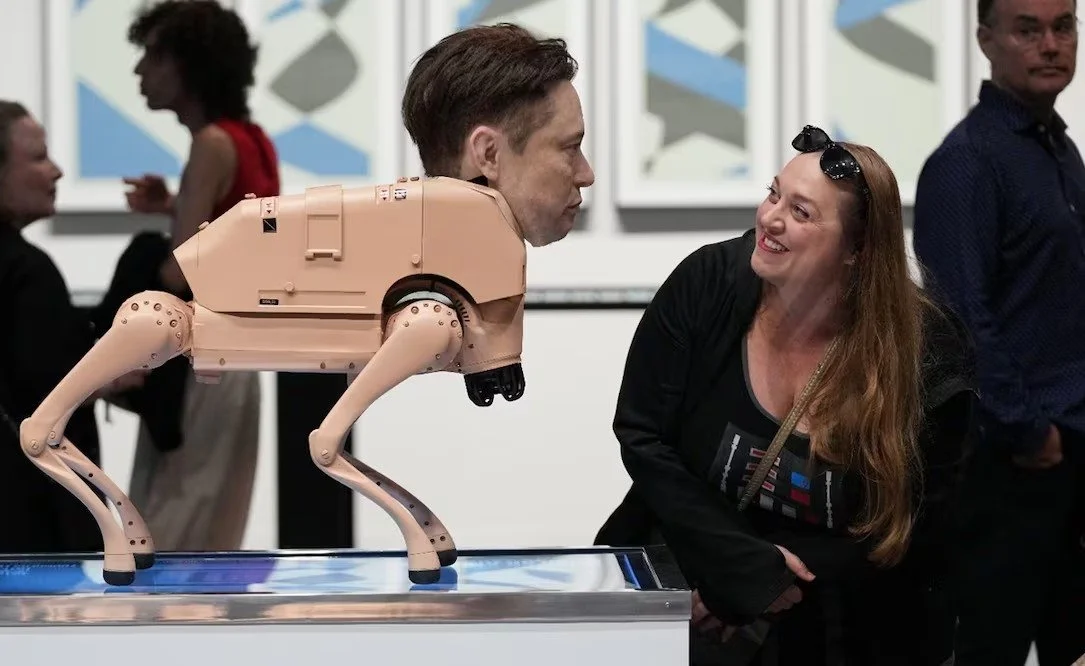
Beeple claims to offer a warning: tech moguls increasingly control the public gaze through algorithms that shape collective perception. Yet his critical gesture remains trapped within the same consumer apparatus it seeks to question. The audience, far from reflecting on the unilateral power these faces represent, simply watches the robots through their phones, waiting to capture the precise moment the creature “defecates” its Warhol-esque or cubist print. The pleasure, as one visitor admitted, is “guilty,” but it resembles nervous relief more than profound reflection.
The market, of course, reacted enthusiastically. All ten robots priced at $100,000 each sold out during the VIP opening day, a figure that stands in stark contrast to the tense months preceding the fair. In a context where sales of works over $10 million fell 39% and where even elite galleries abandoned Art Basel due to instability, the instant success of Regular Animals seems less a triumph of art than a symptom of an ecosystem desperate for any sign of vitality.

The problem, as one dealer noted, is that the work “tramples on the history of digital art and degrades it a bit.” This is not intelligent critique, but rather a gadget satisfying the market’s appetite for the grotesque disguised as innovation. Beneath its dystopian aesthetic, the piece offers the opposite of what it promises: comfort. Technological comfort, moral comfort, the comforting illusion that a robot with Musk’s face is enough to make us feel we are interrogating the digital present.
The fair bolstered this year by new awards, a digital platform called Zero 10, and a VIP lounge aimed at younger buyers is attempting to rebuild its narrative amid a forced reset. But Beeple’s success reveals an uncomfortable truth: while Art Basel reinvents itself, part of the market has already surrendered complexity. It prefers, instead, to watch a robot dog with the mask of a tech titan defecate images that, in the end, do not show the future but our present reduced to an easy joke.