

OXFORD EXHIBITS REDISCOVERED QUENTIN MASSYS MASTERPIECE AFTER DECADES OVERLOOKED AT CAMPION HALL
A discreet artwork hanging for decades in Oxford has triggered an unexpected wave of academic interest. Its quiet rediscovery opened the door to new questions about authenticity, legacy, and public attention.

A 16th-century Flemish painting long overlooked at Campion Hall has been identified as an original by master Quentin Massys and moved to the Ashmolean Museum, where it now draws the attention of visitors and experts.
The work, Christ Blessing, dated to around 1500, had hung discreetly behind the altar in the chapel of the Jesuit centre for research and study at the University of Oxford. Its true significance came to light after a casual inspection by staff linked to the National Gallery, who were overseeing the installation of another painting at the site.
The discovery prompted an extensive scientific investigation led by Dr. Maximiliaan Martens, one of the foremost authorities on Flemish art. Using advanced techniques such as infrared imaging, Martens confirmed that the underdrawing and composition align with the working methods of the Antwerp painter, whose workshop produced numerous versions of the same scene. The analyses also suggested that Massys may have been more directly involved in the piece than previously believed.
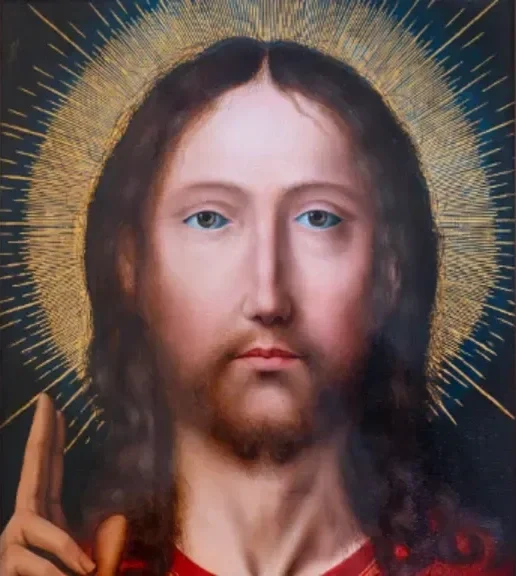
Campion Hall stated that Christ Blessing became a “bestseller” for the artist’s prosperous workshop, active for more than four decades until his death in 1530. One of the variants even helped fund the £2 million renovation of the Church of the Holy Trinity in Bradford-on-Avon, Wiltshire.
After three years of research, the painting was officially unveiled at an event held in November, where its revised attribution was confirmed. It is now on long-term loan at the Ashmolean, displayed in the Baroque Gallery and flanked by two Flemish Lamentations. The museum lists it as a work by “Quentin Massijs and Workshop,” using one of the various recognized spellings of the artist’s name.
The Master of Campion Hall, Dr. Nick Austin SJ, highlighted both the artistic relevance and the spiritual dimension of the piece. “To pause before this painting is not only to admire its beauty or the virtuoso skill of the Master’s hand, but to risk being transformed,” he said. Making the work available to a wider public, he added, reflects a desire to offer deeper access to the contemplative experience the image evokes.
The Jesuit institution, founded in 1896, noted that the decision to relocate the painting reflects a broader discussion about its significance and value within the heritage of Flemish art.