

ALL I WANT FOR CHRISTMAS IS YOU: THE MARIAH CAREY CLASSIC THAT TURNED CHRISTMAS INTO A MUSICAL EMPIRE
Every December, a melody returns like a collective ritual, once again taking center stage in the global conversation. It is not just a song: it is a symbol of time, memory and desire.
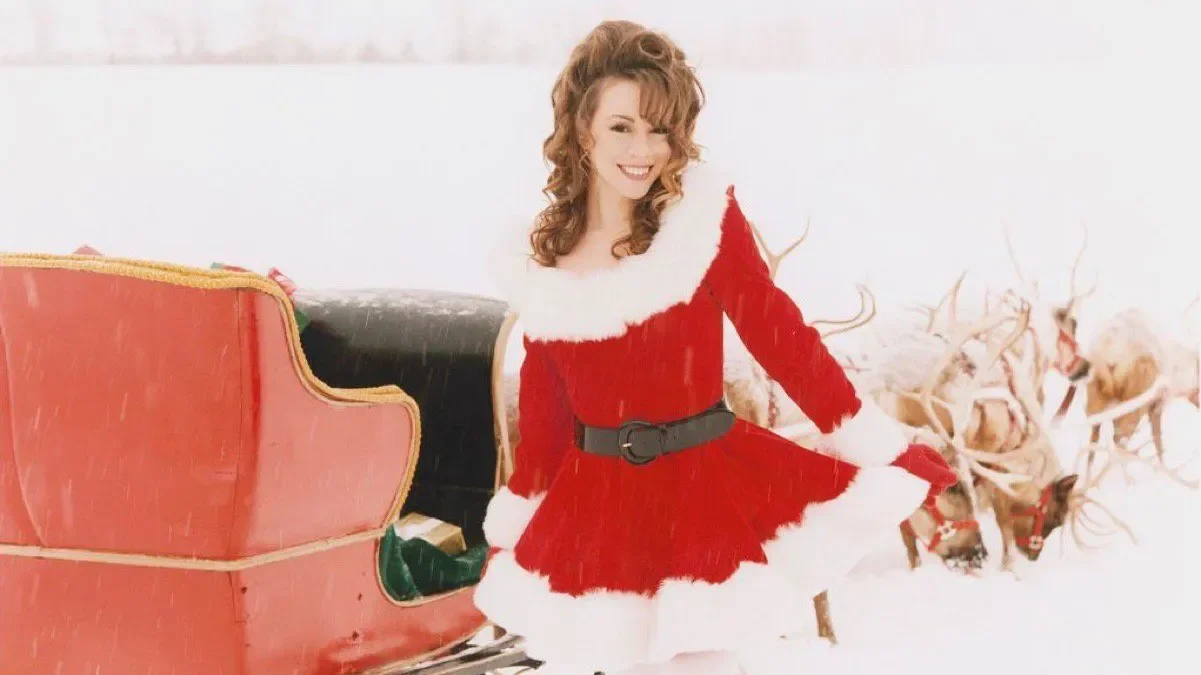
Every November, without fail, Mariah Carey signals the unofficial beginning of the holiday season. She does so not through speeches or traditional advertising campaigns, but through a song released more than three decades ago that, year after year, reclaims its place at the heart of popular culture and the global music business: All I Want for Christmas Is You.
Released in 1994 as part of the album Merry Christmas, the track has become not only the world’s most recognizable contemporary Christmas carol, but also one of the most profitable songs in music history. According to estimates cited by Forbes and The Economist, Carey earns between $2.5 million and $3 million annually from the song’s royalties alone. By 2017, cumulative revenues had already surpassed $60 million, a figure that has continued to grow, fueled by the rise of streaming and seasonal consumption.

Its commercial impact is clearly reflected on the charts. In December 2025, All I Want for Christmas Is You returned to No. 1 on the Billboard Hot 100, reaching a total of 19 weeks at the top. In doing so, it tied the all-time record for the longest reign in the chart’s 67-year history, matching “Old Town Road” by Lil Nas X and “A Bar Song (Tipsy)” by Shaboozey. It also marked the seventh consecutive holiday season in which the song has dominated the ranking an unprecedented achievement.
Billboard notes that this late-blooming success was made possible by streaming. Although the song was released in the 1990s, it did not enter the top 10 until December 2017, nor the top 5 until 2018. Since 2019, it has topped the Hot 100 every holiday season, cementing its status as a multigenerational phenomenon. In the most recent tracking period, it logged 33.7 million streams in the United States, 22.4 million radio audience impressions and 3,000 downloads, according to Luminate data.

The record also carries historic significance for Carey. With this achievement, she now holds 19 No. 1 hits on the Hot 100 the most by any solo artist placing her just one shy of The Beatles’ all-time record. She also became the first artist to reach No. 1 in four different decades: the 1990s, 2000s, 2010s and 2020s.
Behind the phenomenon lies a personal story. Carey has recalled that the song was born amid uncertainty, when her team suggested recording a Christmas album following the success of Music Box in 1993. Drawing from a childhood shaped by financial hardship and an ambivalent relationship with Christmas, she wrote a song that transformed longing into a universal message: the value of companionship over material gifts.
Three decades later, that message continues to resonate. Carey revives it each year through themed tours, public appearances and social media moments, where she symbolically announces that “it’s time” to celebrate. In a volatile industry, All I Want for Christmas Is You is not merely a classic it is a model of cultural longevity and an economic engine that, every December, proves once again that Christmas can be a perfectly tuned business.