

CHRISTIE’S AND SOTHEBY’S REIGNITE THE ART MARKET IN 2025 WITH RECORD SALES
A low murmur returned to the rooms, discreet yet steady. After a period of caution, the art market once again tests the gesture of moving forward.
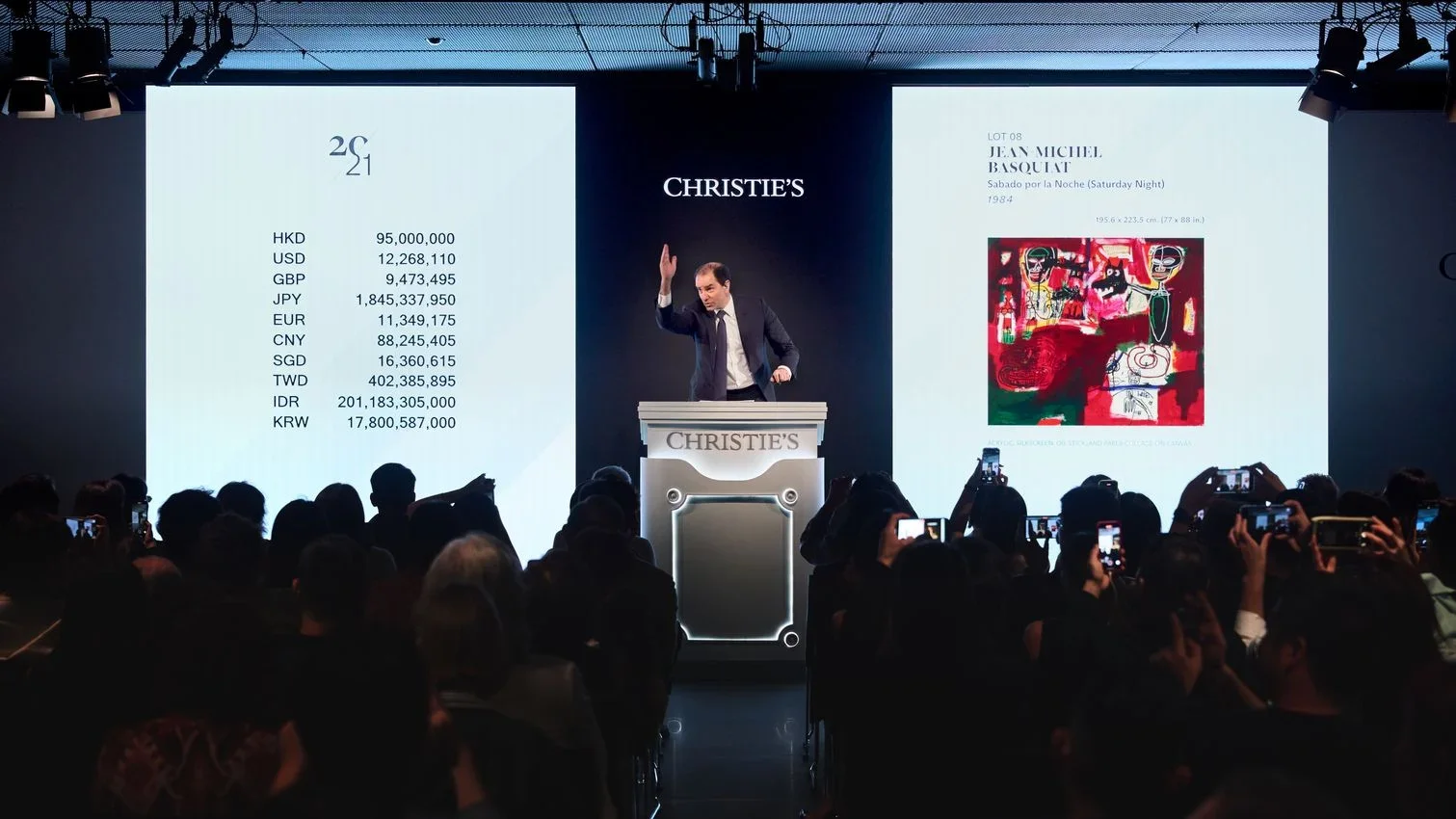
After two years marked by contraction and uncertainty, the global auction market showed clear if measured signs of recovery in 2025. Christie’s and Sotheby’s, the two most influential houses in the sector, reported increases in projected annual sales, driven by high-profile trophy lots, a strengthening luxury segment, and the sustained expansion of private transactions.
Sotheby’s closed the year with estimated global sales of $7 billion, a 17 percent increase year over year. The rebound was reinforced by a particularly strong autumn season in New York, capped by the sale of Gustav Klimt’s Portrait of Elisabeth Lederer (1914–16) for $236.3 million, the most expensive modern artwork ever sold at auction. Public auction sales reached $5.7 billion, up 26 percent from 2024, while private sales totaled $1.2 billion, slightly below the previous year.

Christie’s, meanwhile, projected total sales of $6.2 billion, a 6 percent increase compared with 2024 and in line with its 2023 results. Public auctions accounted for $4.7 billion, up 8 percent year over year, while private sales remained stable at $1.5 billion. The house reported a sell-through rate of 88 percent and a price-to-low-estimate ratio of 113 percent, both improvements on the prior year, reflecting tighter discipline in consignments and estimates.
While Sotheby’s captured the biggest headlines, Christie’s emphasized that its three top sales of the year were completed privately, underscoring how top-tier clients continue to favor transactions away from public scrutiny. Since the pandemic, this channel has gained structural weight: compared with 2019, Christie’s increased private-sale revenues by $700 million, while Sotheby’s added $200 million.
Luxury once again emerged as a key engine of growth. Sotheby’s reported a 22 percent increase in this category, reaching $2.7 billion, while Christie’s rose 17 percent to $795 million. In December, Sotheby’s staged its first Collector’s Week in Abu Dhabi, generating $133.4 million in sales across automobiles, watches, jewelry, handbags, and real estate, reinforcing its strategic focus on the Middle East.
By category, Christie’s reported a 6 percent increase in 20th- and 21st-century art, totaling $2.8 billion, and a notable 24 percent rise in Old Masters, driven by the record sale of a Canaletto in London for £31.9 million. The exception was the Asian Art/World Art segment, which declined 6 percent, alongside a 3 percent drop in spending by Asia-Pacific buyers, a region that delivered uneven results throughout the year.

“Energy has returned to the auction rooms, online sales, and the market overall,” said Christie’s chief executive Bonnie Brennan, pointing to renewed but still selective confidence. Analysts agree that the growth seen does not signal a more active market, but a more stable one sustained by scarcity at the top, liquidity at the base, and a diversification that blends tradition, luxury, and global consumption.