

INFANTA ELENA PUTS ON AN APRON AND LEADS A DAY OF SOLIDARITY IN MADRID
An unusual scene briefly disrupts the script of royalty. A simple, almost domestic gesture turns solidarity into something close, human and unexpectedly contemporary.

In a rare sight for the Spanish royal family, Infanta Elena spent Sunday behind a sweets stall, serving customers, offering smiles and selling pastries she had made herself. The setting was the Fundación Mapfre Solidarity Market, held at Madrid’s Hotel Wellington, a charitable event that took on added significance this year as it coincided with the foundation’s 50th anniversary.
The eldest daughter of King Juan Carlos I and Queen Sofía, and sister of King Felipe VI, assumed an active role in the day not as a ceremonial figure, but as a volunteer. She sold three-chocolate cookies, roscón de Reyes with and without cream, croissants, jars of honey and a homemade sponge cake that quickly became one of the most talked-about items at the stall. Informally dubbed the “royal sponge cake,” the dessert, baked by Elena herself, was priced at four euros per slice and ranked among the best sellers.

“Some of them are mine, yes,” she confirmed with a smile to reporters, while encouraging attendees to contribute and to think “about those who have nothing,” underscoring the spirit of the initiative. All proceeds from this year’s market will go to Guerreros Púrpura, an association dedicated to improving the quality of life of children with neurological and metabolic diseases, as well as supporting their families.
The market, a longstanding fixture of Fundación Mapfre’s Christmas calendar, brought together volunteers, employees and visitors in a warm, festive atmosphere. Rather than limiting herself to photo opportunities, the Infanta engaged with the public, explained the products and promoted the foundation’s social causes, where she serves as Director of Social Projects. Her active involvement drew customers and visibility to the initiative, reinforcing her role as an unofficial ambassador for the event.
The day also revealed a lesser-known side of the Infanta: her interest in baking. Until now, this skill had not been part of her public image, but her hands-on participation in preparing and selling sweets added a human, everyday dimension to a figure traditionally associated with protocol.
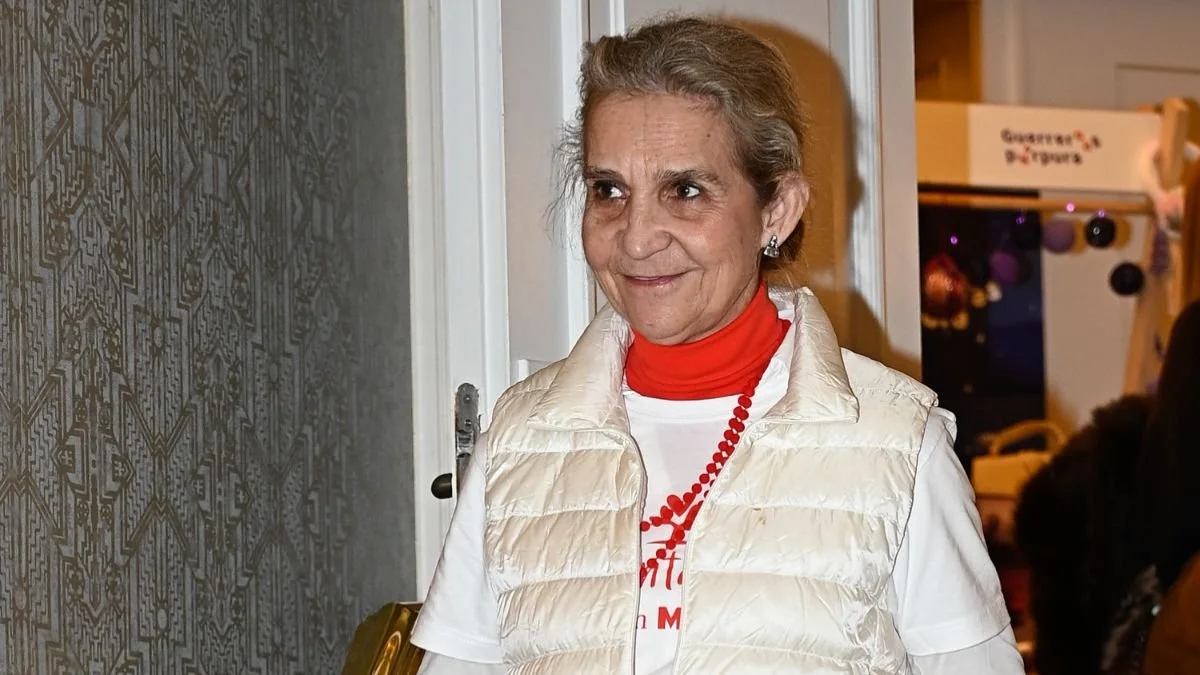
Dressed in straight-leg jeans, a white T-shirt, a cream-colored padded vest and white trainers with red details, she completed the look with a pearl necklace a classic touch integrated into a practical outfit. The styling conveyed approachability and normality, in keeping with the hands-on nature of the event and reflecting a shift toward more relaxed codes within royal style.
Her involvement in the market comes just days after a visit to Las Palmas de Gran Canaria, where she learned firsthand about the “Juntos Somos Capaces” employment integration program, developed with the Down Las Palmas Association. The initiative has enabled around 400 people with intellectual disabilities to access employment, illustrating the foundation’s focus on inclusion and autonomy.
As she left, the Infanta wished those present a “Merry Christmas.” It was a simple conclusion to a day that blended tradition, solidarity and the unexpected aroma of homemade sponge cake revealing a member of Spain’s royal family more at ease with tangible causes than with formal ceremonies.